
Follow us on Facebook
Tino Ceberano Hanshi, 10th Dan, is often referred to as the father of Karate in Australia. His years of experience and selfless dedication to the Martial Arts have provided him with the skills and knowledge deserved of the Martial Arts history books.
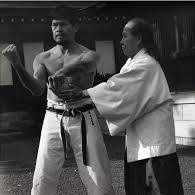
Ceberano Hanshi was born of Filipino/Spanish decent and raised in Hawaii on the Island of Kauai, his father was a Filipino migrant who came to Hawaii as a professional boxer who also had acquired the skills of Filipino martial arts.
As a young man Hanshi and his father trained together in Kenpo, which was the word commonly used instead of Karate. The Chinese would refer to Shorin Kenpo as what Shaolin Kenpo was. The Okinawans referred to Okinawa-te instead of Karate. Kenpo was actually introduced to Hanshi by a neighbour, who was a returned serviceman, “He would gather up a group of kids and we would train together after school”.
In 1958 the Goju kai opened in Hawaii, Kyokushinkai and Shotokan arrived in Hawaii as well. Before that there was only Kenpo and Okinawa-te and the training wasn’t all that serious. With the introduction of these Japanese Karate organizations, things changed. People began to understand the values of the Martial Arts and became a lot more focused about how they should be practised. Ceberano Hanshi’s most revered teacher, as a young man, was Anton Navas Sensei. Navas Sensei took a young Ceberano under his wing and, from 1959 through to 1966, guided him in the true meaning of the Martial Arts.
Joining the Marines changed Hanshi’s life, he went from living as a happy go lucky Islander, to being part of the armed forces elite and living a much more structured Western life style, this was quite a culture shock for him. As part of the Fleet Marine Force Pacific, he was a specialist in the field of teaching armed and unarmed combat with a background of reconnaissance for which his job was to be on call to engage the enemy or secure information. The Force also served as the protection squad for senior officers.
Ceberano Hanshi also participated in the Fleet Marine Force Pacific Drum and Bugle Team marching squad, where he played the bugle. It was with this team that he first came to Australia in 1962, both playing the bugle and exchanging ideas and practice on combative warfare, which was part of a highly confidential military operation at the time. The team eventually visited Okinawa and mainland Japan, it was on his first trip to Tokyo that Ceberano Hanshi met the legendary Yamaguchi Gogen Hanshi, founder of the Japanese Gojukai.
After receiving his 3rd Dan from Yamaguchi Hanshi, and at Yamaguchi Hanshi’s direction, Ceberano Hanshi arrived in Australia with his family in 1966. He immediately set about introducing the relatively unknown world of Karate to Australians. From small beginnings the school of Goju Karate has become one of the most widely practiced of the styles of Karate in Australia. This is due, in no small part, to the skill and dedication of Ceberano Hanshi. After the passing of Yamaguchi Hanshi in 1989, Ceberano Hanshi formed his own Karate organisation, the IGK (International Goju Karate).
Over the last 12 years, Hanshi has been working on and developing his Goju Kalis concept, now it is here!

 Tino Ceberano's Goju Kalis